
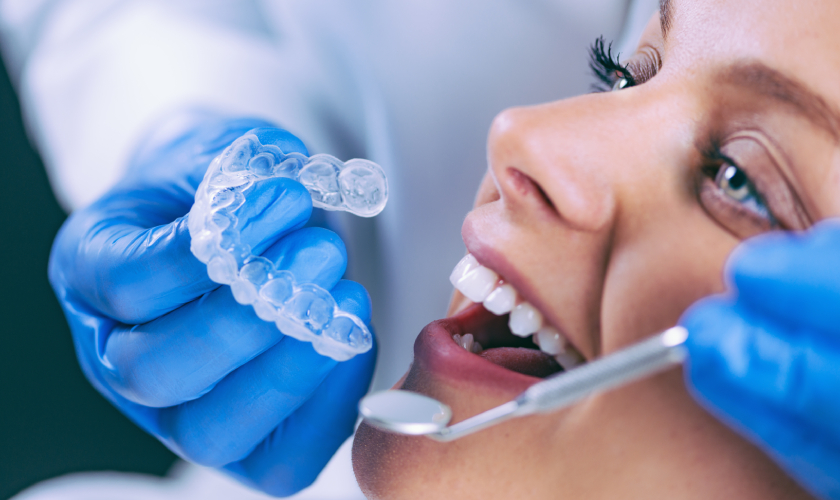
Have you faced a slight lisp while talking with your new Invisalign aligners? Don't worry. You are not alone. Many people experience this temporary speech shift within the first week of wearing Invisalign. The good news is that this often rapidly resolves as your mouth becomes accustomed to them.
In this blog, we will share with you some practical ways to avoid the lisp and ensure you can be articulate while you get accustomed to your new aligners. The right adjustments can help you communicate with confidence in no time.
The "Invisalign lisp" occurs when the aligners temporarily alter the position of your tongue against the top of the mouth, especially while articulating specific sounds. Invisalign aligners sit on the teeth and thus change the feel of your mouth when talking. As your tongue adjusts to the aligners, it will make subtle modifications in your speech that deliver a different-sounding you.
Rest assured, this is a common issue, but it usually does not last long. The good news is, with practice, this lisp will disappear with time as your mouth becomes accustomed to wearing Invisalign.
Reading aloud is one of the most effective ways to adjust to Invisalign in Ann Arbor. Start with simple sentences, gradually building up to longer paragraphs. Speaking regularly helps your mouth and tongue get used to the new aligners. Over time, you will definitely feel your speech becoming more natural and fluid.
This can make any lisp from your aligners more prominent. Instead, try taking small breaks during your conversations. Sometimes, all your mouth needs is an extra second to reset, and you will be saying your words much clearly. Slowing down can also give your tongue more time to get used to the aligners.
Emphasize syllables or certain words when speaking to make things clearer. Paying close attention to proper enunciation will reduce the lisp. Pantomiming or exaggerating your mouth movements can help you articulate in a more definite pronunciation, particularly when speaking rapidly or using complicated sentences.
Practicing in front of a mirror can give you visual feedback on how your tongue moves while talking. This visual feedback will provide good assistance in discovering any difficulty and correcting speech habits. You may even notice small adjustments that can make a big difference.
Sometimes, wearing an Invisalign aligner can make your mouth a bit dry and affect your speech. Drinking lots of water will keep your mouth comfortable and allow easier speech. You can limit discomfort by staying hydrated, making the transition easier.
The lisp associated with Invisalign in Ann Arbor is temporary. It typically disappears after the first few days to a week of wearing. A few people adjust rather fast, but others may take just a little longer, especially if they are new to aligners.
On average, most find that their speech improves within a week or so as their mouth is getting used to the aligners. Be patient-this small issue is just part of the adjustment process.
Invisalign is usually associated with a lisp within the first week of wearing. With practice and patience, your speech will get better as your mouth becomes accustomed to the aligners. You may also call us for further assistance if the lisp continues or if discomfort is experienced. Keep in mind, there is a process involved with speaking clearly with Invisalign, and soon you will be talking just like before-lisp-free!
Can I avoid the lisp by using a tongue exercise?
While tongue exercises can help with speech, practicing speaking out loud is the most effective method to overcome the lisp. Regular practice helps your tongue adjust to the aligners quickly.
How do I adjust to wearing Invisalign while talking with others?
Practice speaking regularly in front of a mirror and during casual conversations. The more you speak, the quicker you’ll adjust, and the less noticeable the lisp will be.
Can I wear Invisalign if I have a sensitive tongue?
Invisalign aligners are designed to be comfortable, but if you have a sensitive tongue, you may feel some irritation at first. Practice speaking to allow your tongue to adjust more comfortably.
Can I avoid the lisp by speaking in different positions?
Speaking from different positions, like sitting or standing, doesn’t significantly affect the lisp. The key to overcoming it is practicing speaking regularly and making slight enunciation adjustments.
What can I do if the lisp lasts longer than a week?
If the lisp persists beyond a week, consult your orthodontist. They may adjust your aligners or suggest additional exercises to help your tongue adapt more effectively.